WhatsApp:
E-mail:
Mobile Phone:
Tel:+86 022 86728681
Fax:+86 022 86728681

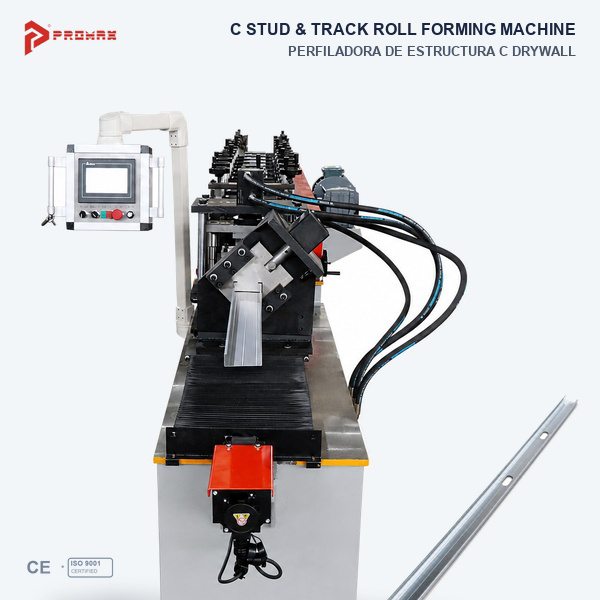
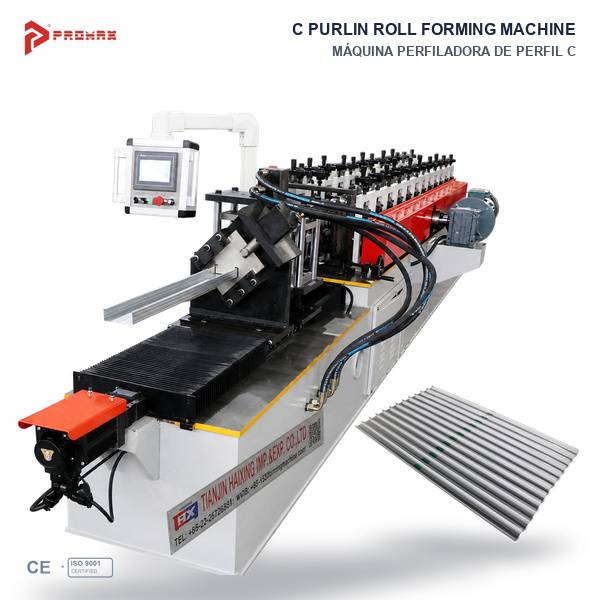
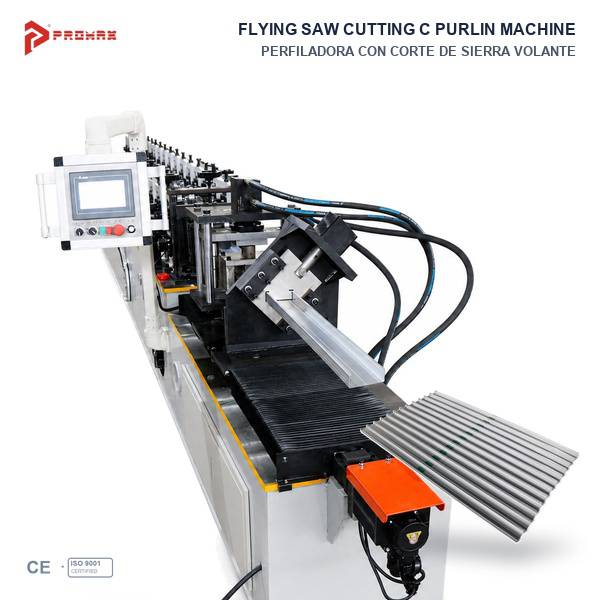
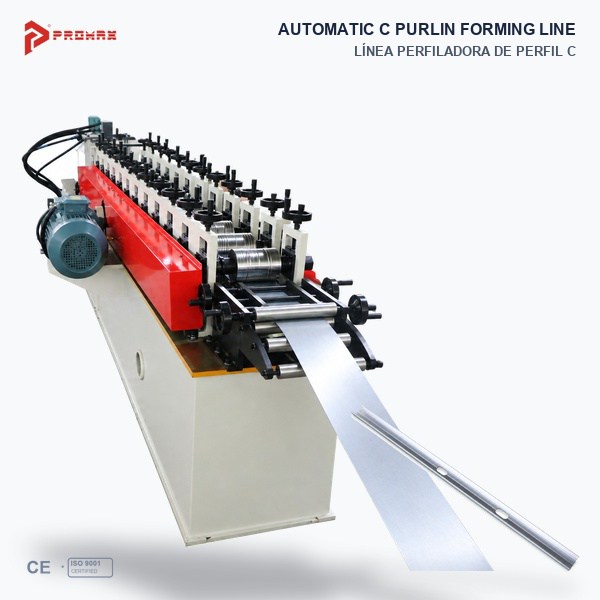
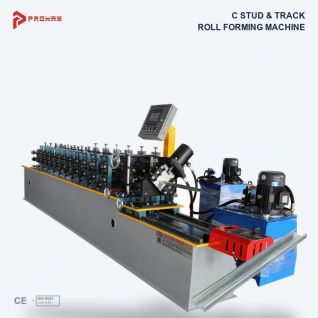
The PROMAX Steel Stud Roll Forming Machine is designed for manufacturing galvanized steel C-shaped studs used in drywall partitions and interior metal framing systems.
Machine Type: Cold Roll Forming Machine
Material: Galvanized Steel
Features: Customized roller tooling, continuous C stud forming, cut-to-length production and optional PLC control.
Applications: Drywall C studs, gypsum board partition walls and non-load-bearing metal framing.
Customization: Profile dimensions, steel thickness, cutting lengths and machine configuration.
Send your profile drawings and request a customized quotation.
The steel stud roll forming machine from PROMAX is designed for manufacturing galvanized steel C studs used in drywall partition walls, gypsum board framing systems and interior metal construction. Using continuous cold roll forming technology, the machine converts flat steel strips into C-shaped metal studs through a series of forming rollers.
Steel C studs are commonly installed vertically between compatible U tracks to create a framework for gypsum board partition walls. Their dimensions, straightness and cutting lengths are important for assembly and compatibility with the intended framing system.
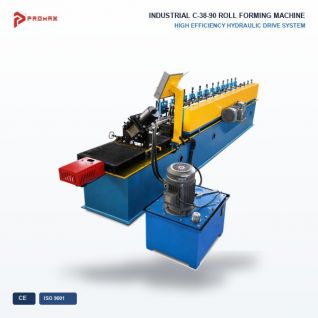
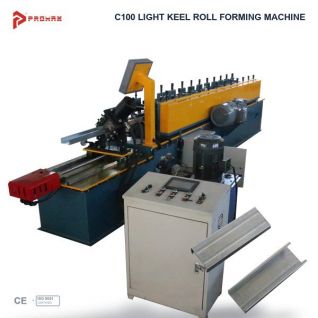
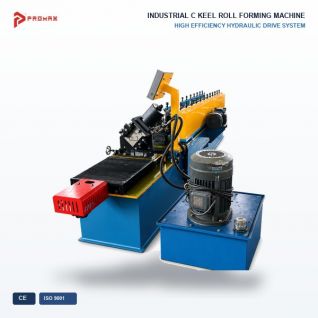
PROMAX develops customized steel stud roll forming machine solutions based on customer profile drawings, steel material specifications and production requirements. The equipment can be configured with a decoiler, feeding and guiding system, roll forming stations, cutting unit, control system and receiving table.
The final equipment configuration, production capacity and optional functions are determined according to the approved technical design.
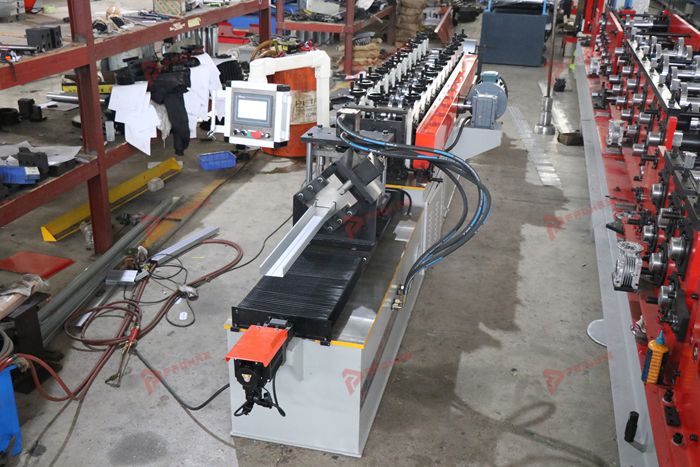
A steel stud roll forming machine is industrial equipment used to manufacture steel framing studs from galvanized steel coils through a continuous cold forming process.
For drywall applications, the equipment is generally designed to produce C-shaped profiles with defined cross-sectional dimensions.
The steel strip passes through successive forming stations, where each set of rollers gradually bends the material into the required C stud shape.
After the forming process, the profile is cut to the specified finished length and collected for inspection.
The machine design depends on the profile geometry, steel thickness, material properties and production requirements.
Galvanized C studs are widely used as vertical framing members in drywall partition systems for residential, commercial and institutional buildings.
They are typically installed between compatible U tracks and provide the framework for gypsum board wall installation.
Common applications include:
The suitability of each finished stud depends on its dimensions, steel thickness, mechanical properties and the requirements of the intended construction system.
The steel stud roll former uses a progressive cold forming process to transform galvanized steel strips into finished C-shaped studs.
The production process begins with a steel coil placed on the decoiler. The strip passes through the feeding and guiding system before entering the forming section.
Inside the forming section, successive roller stations gradually bend the flat steel strip into the specified C profile.
Each station performs a controlled bending operation, allowing the profile geometry to develop progressively.
After forming, the profile passes through the cutting system to obtain the required finished length.
Depending on the machine configuration, optional operations such as punching, marking or automated length control may be incorporated.
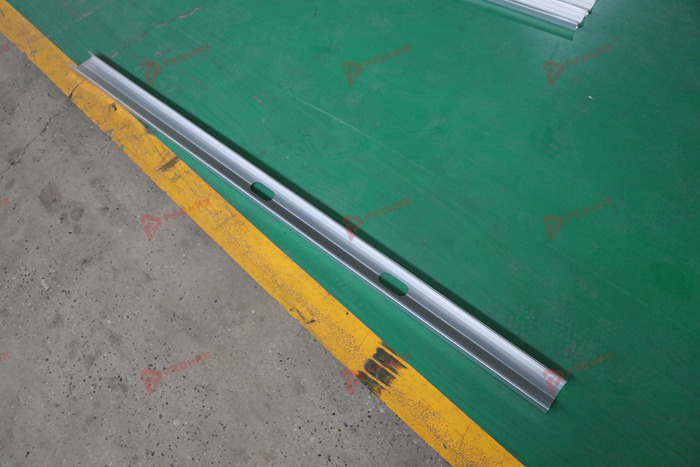
A typical C stud roll forming machine may include several integrated systems. The final configuration is determined during the technical design stage.
The number of forming stations, drive arrangement and component specifications depend on the approved machine design.
Roller tooling is one of the most important parts of a steel stud roll forming machine.
The forming rollers are designed according to the required profile geometry, including the web width, flange height, return lip dimensions and bending radii.
Steel thickness and material properties must also be considered during tooling development.
Each forming station gradually changes the strip geometry to achieve the final C-shaped section.
Proper roller alignment, strip positioning and tooling design are important for maintaining dimensional consistency during production.
PROMAX can develop customized roller tooling according to customer-approved C stud drawings.
Cold roll forming is widely used for manufacturing metal profiles with consistent cross-sectional shapes.
During the process, the steel strip passes through multiple forming stations without being heated for the bending operation.
Progressive forming allows the material to reach the required profile geometry through a controlled sequence of bending steps.
The forming process must be designed according to the steel properties, profile dimensions and expected manufacturing conditions.
For drywall framing manufacturers, cold roll forming provides a practical production method for galvanized steel C studs.
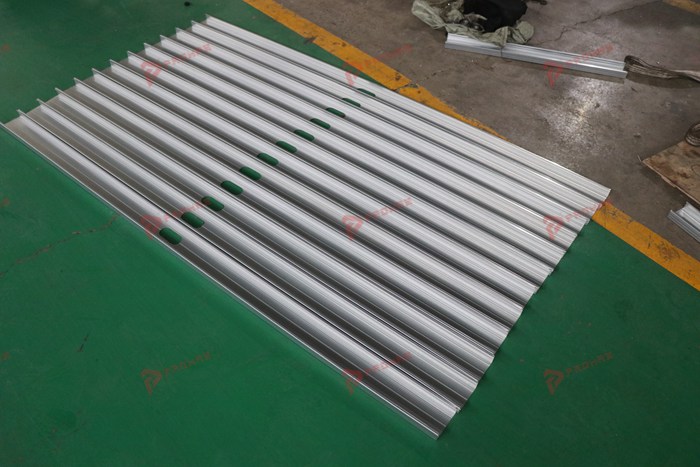
Galvanized steel is commonly used in drywall framing because it combines mechanical strength with a protective zinc coating.
Before selecting a galvanized steel stud machine, manufacturers should confirm the steel thickness, strip width, yield strength and coating characteristics.
These parameters influence the forming forces, roller design and machine component selection.
The selected material must be compatible with the equipment specifications and the requirements of the finished stud.
Different material grades and thickness ranges may require adjustments to the technical design.
The manufacturing process for galvanized C studs generally includes the following stages:
The manufacturing sequence may vary according to the equipment configuration and optional processing functions.
The PROMAX drywall steel stud machine can be configured with a PLC control system to manage selected production functions.
Depending on the configuration, operators may enter cutting lengths, production quantities and other available parameters through a human-machine interface.
The cutting system is selected according to the profile geometry, steel thickness and required production process.
Automatic cutting options can support manufacturing orders requiring different finished lengths.
All control functions and cutting specifications are confirmed in the final technical proposal.
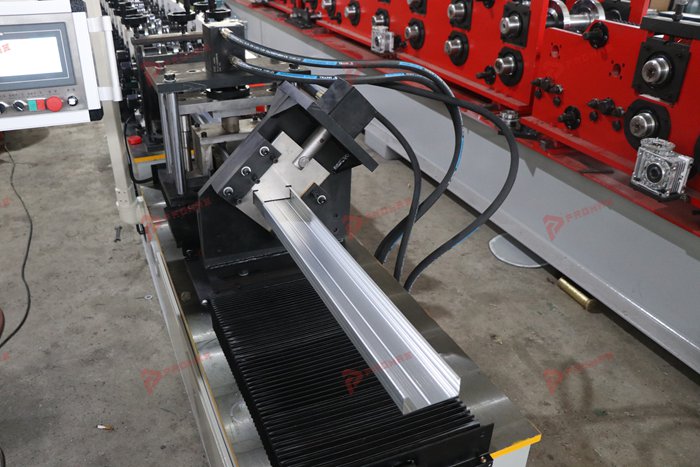
PROMAX provides customized roll forming solutions for manufacturers producing different types of C-shaped drywall studs.
The machine can be developed according to customer requirements for profile width, flange dimensions, return lip geometry, steel thickness and cutting length.
Additional operations, such as punching, can be evaluated when compatible with the machine design.
The ability to manufacture multiple profile sizes on one machine depends on the tooling arrangement and adjustment mechanisms.
Automatic size changing should not be assumed unless it is specifically included in the equipment configuration.
For accurate machine development, customers are encouraged to provide complete profile drawings and material specifications.
C studs and U tracks are complementary components of many drywall partition systems, but they have different cross-sectional geometries and installation functions.
C studs typically include a central web, flanges and return lips, and they commonly function as vertical framing members.
U tracks generally have a channel-shaped section and are installed horizontally to receive and position compatible studs.
Because their geometries are different, the roller tooling required to manufacture each profile is also different.
This steel stud roll forming machine is intended for C-shaped profiles. Manufacturing U tracks requires suitable tooling or a separate machine configuration.
Manufacturers requiring both profile types may consider a double-head stud and track machine or another suitable production solution.
When planning a steel stud manufacturing operation, equipment selection should be based on the required product range and expected production volume.
Manufacturers should determine the profile dimensions, steel material specifications, finished lengths and production capacity expectations.
Factory planning should also consider steel coil handling, material storage, finished product collection and quality inspection procedures.
The selected machine configuration should match the intended product specifications and production workflow.
PROMAX can review customer requirements and recommend a suitable equipment arrangement.
Dimensional inspection is an important part of steel stud manufacturing.
Typical inspection points include profile width, flange height, return lip dimensions, straightness and cutting length.
The condition of the galvanized coating should also be checked after forming.
Inspection tolerances and acceptance criteria should be defined according to the approved profile drawings and the intended drywall framing system.
Consistent raw material specifications and appropriate machine maintenance are important for stable manufacturing.
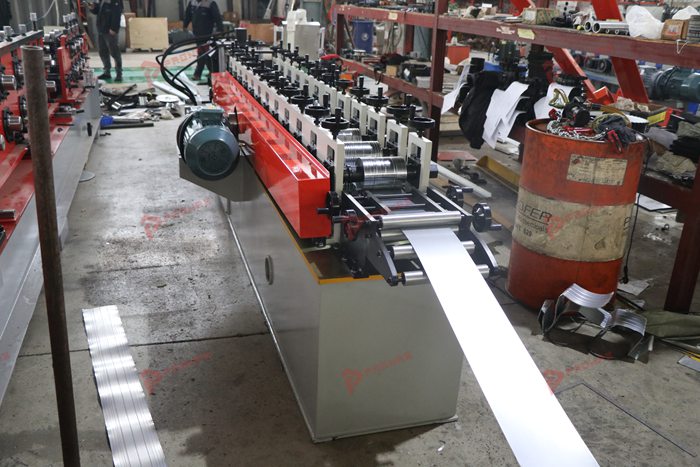
Before purchasing a steel stud roll forming machine, manufacturers should define the required C stud dimensions, steel material specifications and production needs.
Important information includes the profile drawing, steel thickness, material grade, finished cutting lengths and expected production capacity.
Customers should also identify whether punching, special cutting functions or customized automation are required.
These details help determine the appropriate roller tooling, forming stations, cutting system and machine control configuration.
PROMAX can evaluate customer requirements and develop a suitable technical proposal.
PROMAX develops cold roll forming equipment for drywall studs, tracks, ceiling channels and lightweight steel framing profiles.
Our services include profile drawing evaluation, machine configuration planning, customized tooling and equipment manufacturing.
Backed by Tianjin Haixing's experience in roll forming technology since 1996, PROMAX supports manufacturers seeking customized equipment solutions for different markets.
Our team can help customers evaluate material specifications, profile geometry and production requirements before preparing a quotation.
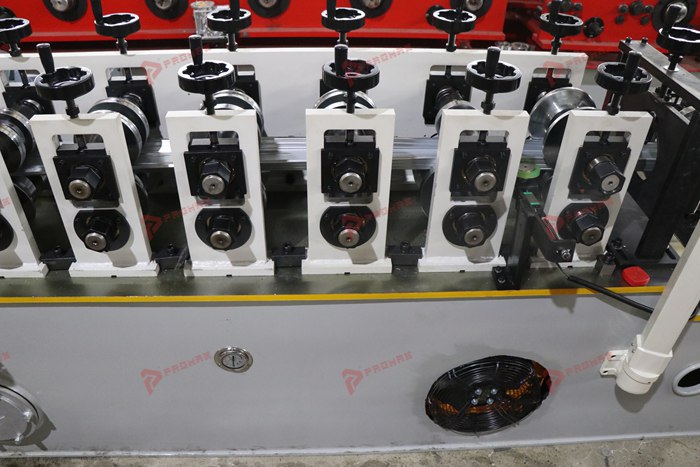
Are you looking for a steel stud roll forming machine to manufacture galvanized C studs for drywall framing systems?
Send us your C stud drawings, steel thickness, material specifications, required cutting lengths and production capacity expectations.
Our engineering team can review your requirements and recommend a suitable machine configuration.
Contact PROMAX today to request a customized quotation for your steel stud roll forming machine.
WhatsApp Code